 1. Tell us a little about your ranch and what a typical day looks like for you.
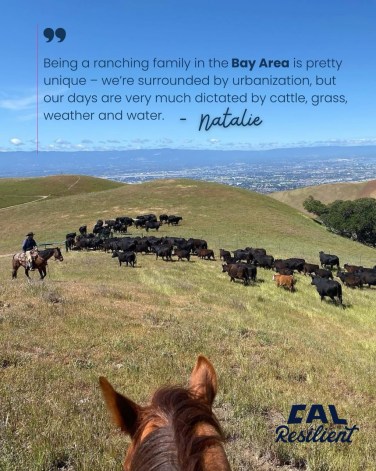
Our ranch is a fifth-generation cattle operation in the East Bay of California. We run a commercial cow calf business and also market our beef direct to consumer. Being a ranching family in the Bay Area is pretty unique – we’re surrounded by urbanization, but our days are very much dictated by cattle, grass, weather and water.
For me there isn’t a “typical” day. I am a working mom, I have a corporate career, I help on our ranches and run Koopmann Family Beef. It can be a lot to juggle at times, but I thrive in the fast pace of our life and showing my kids what it means to work hard and be a part of something bigger than ourselves.
2. What made you want to become a cattle rancher and sell beef directly to consumers?
I am not sure I ever had a plan of becoming a rancher. I married into a ranching family and jumped in feet first. We started small and just continued to grow throughout the years. I’ve always had the attitude “if you’re going to do something then do it right.” My husband Clayton and I work together to grow through our own strengths and build everything together. I had the idea to sell direct to consumers when I saw a need for selling beef right before COVID hit. We would get a lot of questions where people could buy our beef and I thought there was enough of a need to educate consumers on where their beef came from as well as provide an outlet for our own beef.
3. What does raising cattle in the East Bay Area look like? Is there a misconception about ranching you’d like to address?
Ranching in the Bay Area looks very similar to what most people envision when they think of ranching, although, our cattle are around people all the time. We run on a lot of public ground and the cows many times will have hikers and cyclists around them throughout the day. We still have many of the same issues as everyone else but occasionally ours include people getting too close to baby calves or a cow bellowing too loud behind the houses and they want us to check on them.
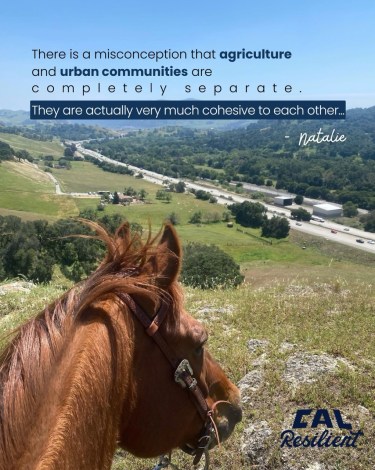
There is a misconception that agriculture and urban communities are completely separate. They are actually very much cohesive to each other and I think that creates opportunity to educate people. There are so many benefits to grazing that improve the landscape, fire protection, and wildlife conservation that is being created in their backyard. There is so much more than just cows on the hill.
4. Conservation is an important part of your family’s ranching operation. What are some of the ways you’re caring for the land and wildlife on your ranch?
We tailor our grazing management strategies to enhance habitat for special status wildlife species including, California tiger salamander, California red legged frog, burrowing owl, American badger, Bay checkerspot butterfly, Callipe silver spot butterfly, Western pond turtles, and raptors. We improve and install wildlife friendly infrastructure including fencing and water systems.
5. It’s the International Year of the Woman Farmer. What does being a woman in California agriculture mean to you?
Being a woman in agriculture means being willing to wear a lot of hats, and many times all of them in one day. I love that agriculture provides us with the opportunity to be many things all in the aspect of a day. I love that women have a unique set of skills they can bring to the table to be able to contribute. You don’t have to fit a particular mold to have an important job in agriculture.
For me being a woman in agriculture means bringing a different perspective, working hard, constantly learning and being willing to jump in when needed. It also means showing my boys that women can build businesses, work hard and can contribute to the success of a family operation.
6. What do you think makes ranching families like yours resilient?
All ranching families are resilient because they have to be. Ours is unique in the sense that we have a story to tell through saving our ranch through conservation. Our family in its entirety practice conservation efforts and educate on many others on it as well. Conservation was a tool to save our ranch and now it’s up to us as the next generation to keep it going for many to come. Clayton and I focus on finding different ways to market our calves, improve our health and genetics and finding ways to adapt while keeping in mind all the ways we can improve the land we run cattle on.


